
4 hr
Underground Cagliari Walking Tour
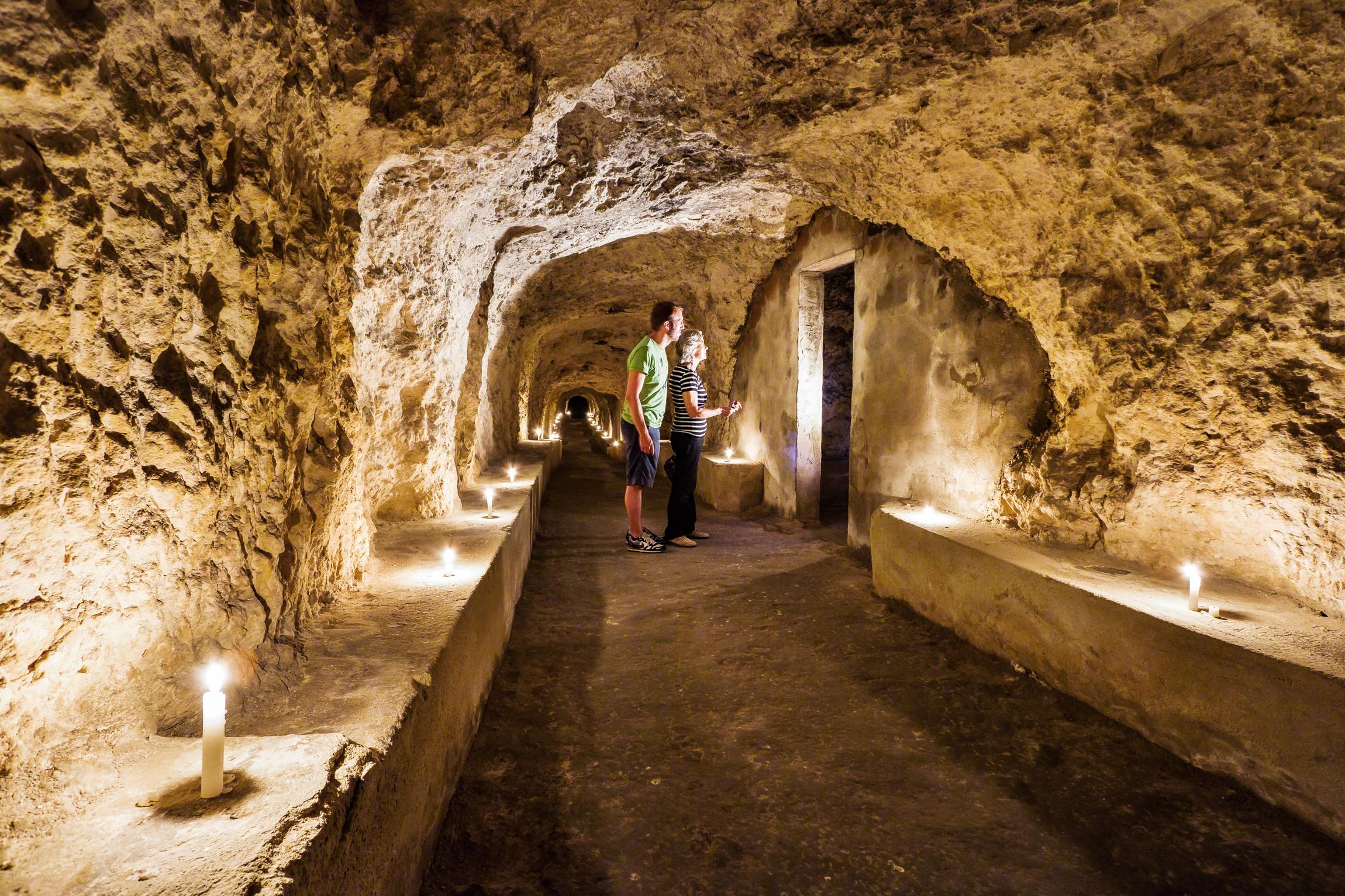
Journey beneath the city streets to explore hidden tunnels, ancient crypts, and Roman archaeological sites
Reserve
Hand-picked by our editors — only the best 5 experiences from 60 reviewed.
Verified partners for every tour, free cancellation where available, and instant confirmation on every booking.
4 hr
Journey beneath the city streets to explore hidden tunnels, ancient crypts, and Roman archaeological sites
Reserve
3 hr
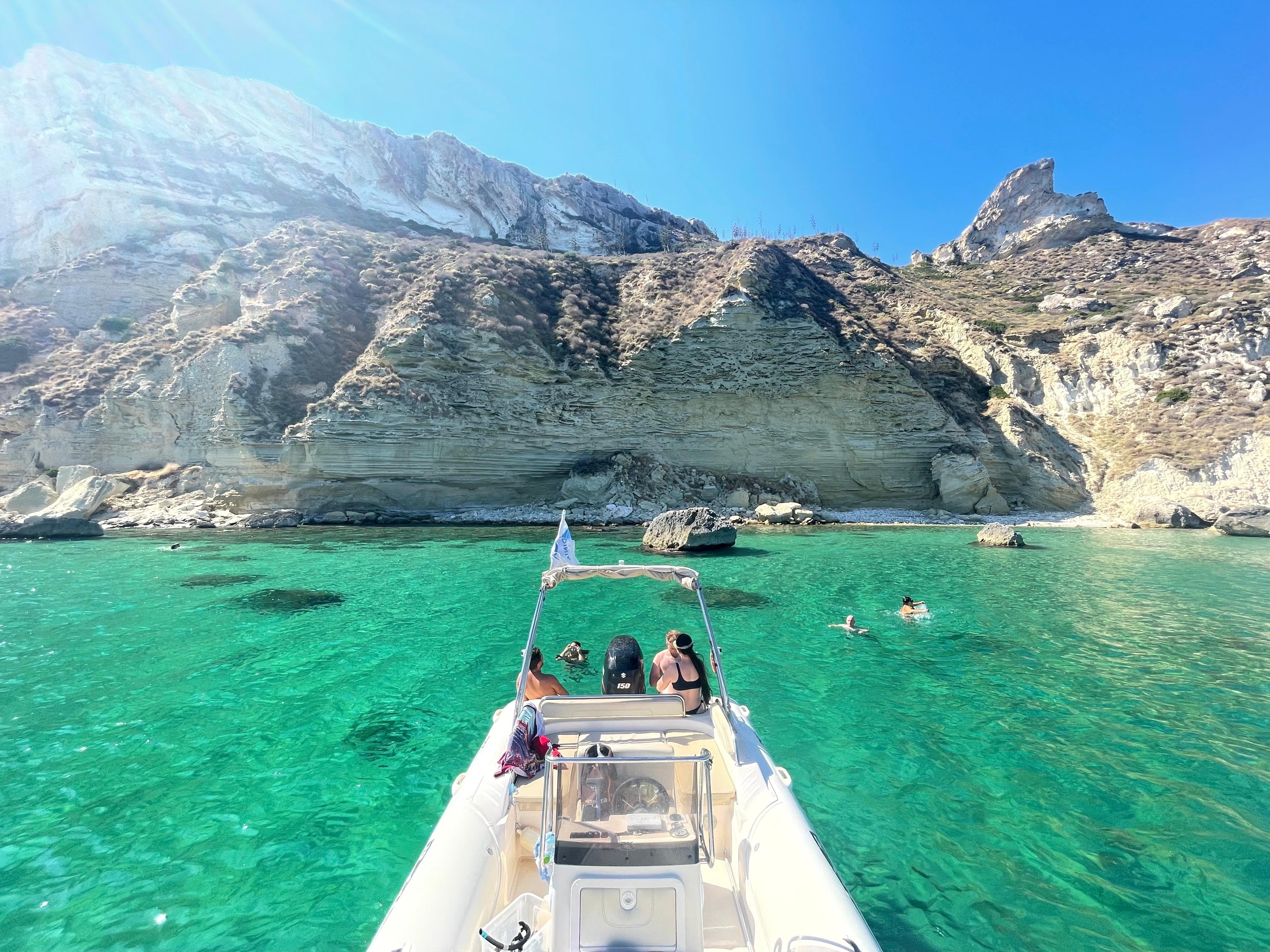
Three-hour RIB boat adventure along Devil's Saddle with four aquatic stops and sparkling wine
Reserve
4 hr
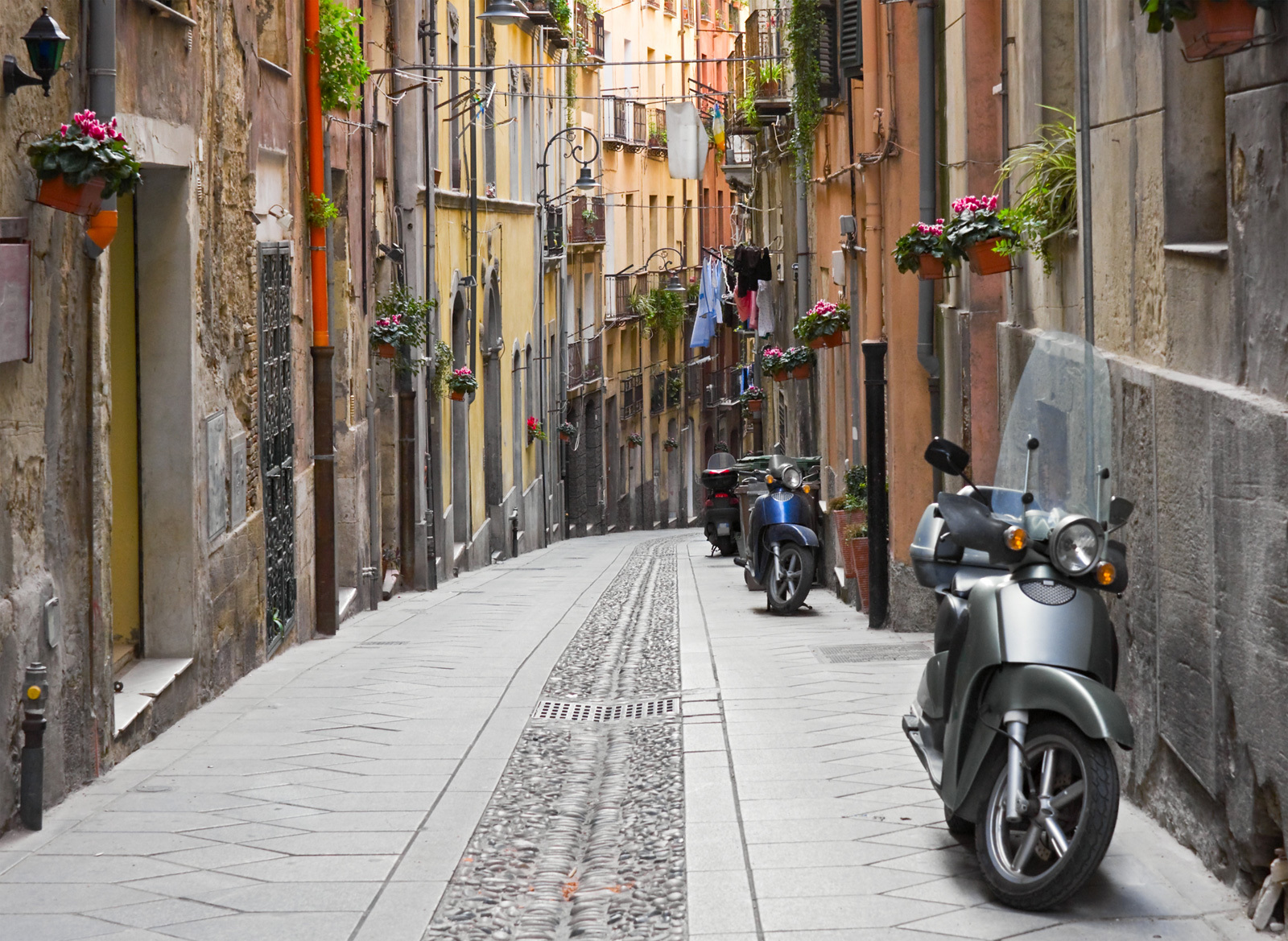
Explore ancient streets and medieval landmarks in Sardinia's historic capital with a knowledgeable local
ReservePrices from verified partners. Availability updates in real time at checkout. Free cancellation policies apply where shown.
The landmarks, rooms, and views travelers on this tour remember — all visible on a single visit.
An ancient limestone cave that served as a quarry, church, and World War II air raid shelter.
Hidden ruins beneath the church featuring a paved Roman road and layers of diverse historical periods.
A 120-meter wartime tunnel used for shelter, now illuminated to recreate a historic atmosphere.
Located at Via Sant'Efisio 14, this site marks the traditional place of imprisonment of the city's patron saint.
The subterranean tunnels offer an intimate look at hidden history, whereas the amphitheatre provides a grand, open-air perspective on ancient Roman engineering. They complement each other; most visitors who do both call the underground path the more immersive experience.
| Feature | Top pick Underground Tour | Roman Amphitheatre |
|---|---|---|
Experience Type |
Subterranean crypts and tunnels | Open-air architectural ruin |
Underground Atmosphere |
Enclosed and dimly lit | Exposed to natural light |
Archaeological Significance |
Diverse historical layers | Classical Roman period |
Physical Intensity |
Moderate with confined spaces | Low but uneven terrain |
Duration |
1.5 hours | 45 minutes |
| See tickets → |
Verdict: Choose these cagliari underground tour tickets tours for a mysterious journey through the city's foundations, or visit the amphitheatre to experience the cagliari underground tour tickets tour site's expansive scale and cagliari underground tour tickets tickets access to ancient structural landmarks.
Choose your ticket, select your date, and reserve in under two minutes. Secure checkout handled by our verified partner.
Instant confirmation by email, with a mobile voucher you can save offline. No printing, no queuing at a collection desk.
Arrive at the entrance, show your voucher on your phone, and walk in. Most tickets include priority or skip-the-line access.
Practical details for your visit straight from our verified partners — hours, access, rules, and how to get there.
Comfortable, closed-toe walking shoes are required for uneven terrain in limestone caves and tunnels.
Only small personal bags are permitted inside underground sites. No security lockers are available on-site.
Photography is permitted in most areas, though flash may be restricted in sensitive archaeological zones.
These sites are not wheelchair accessible and often involve steep stairs or narrow, uneven subterranean passages.
Children are welcome, and strollers may be used in certain outdoor walking segments, but not inside the caves.
Food and drinks are prohibited inside the underground monuments to protect the historical environment.
Best time to go, insider tips, nearby landmarks, and the cancellation fine print — flip through to skim what matters to you.
Flexible, no hidden fees.
For a full refund, cancel at least 24 hours before the scheduled departure time. The standard adult entrance fee is 3 EUR per monument, with an €8 combined ticket available for multiple sites.
The hill of Castello is not solid. Beneath its Pisan walls runs a second Cagliari, cut into soft Miocene limestone over roughly two and a half millennia, and standard adult entry to a single monument still costs 3 EUR. Phoenician settlers arrived on this promontory around the eighth century BC and found stone that yielded to a chisel yet held a vault without collapse. Carthaginians widened their cavities into burial chambers. Roman engineers turned the same rock into cisterns, drainage galleries and quarry faces, hauling blocks upward to build the amphitheatre carved directly into the slope. Later centuries added their own layers: Byzantine crypts, medieval storage rooms, wine cellars belonging to the aristocratic palaces above. During the Allied bombardments of February 1943, when much of the city centre was flattened, thousands of residents sheltered in these tunnels for weeks. Chalk arrows and hand-painted numbers from that winter survive on several walls. Visitors searching for cagliari underground tour tickets tours are, in effect, buying access to a continuous archive of Sardinian survival. What distinguishes the network is its stratigraphy. A single passage can begin as a Punic hypogeum, narrow into a Roman aqueduct channel, and open into a 1940s shelter fitted with concrete benches — three eras in forty paces. Cagliari underground tour tickets grant entry to individual monuments across this system, from the Grotta della Vipera on the western slope to the cavities under the Basilica of San Saturnino, while the Cripta di Santa Restituta preserves a natural karst chamber later consecrated as a Christian crypt. The rock itself explains the city's colour. The same pale limestone, quarried from below, faces the ramparts, the Torre dell'Elefante and the Bastione di Saint Remy above. Cagliari is a settlement built literally out of its own foundations, the negative space of extraction becoming the positive mass of the walls. Conservation is delicate work: humidity fluctuates, salt crystallises across ancient plaster, and municipal restoration campaigns have progressively reopened chambers sealed for decades. Sardinia's regional heritage office continues that programme through 2026. The result is a monument type rarely found so intact elsewhere in the Mediterranean, where an entire capital's history can be read vertically rather than across a square.
"Three eras in forty paces — Punic tomb, Roman channel, wartime shelter."
A step-by-step walkthrough of the visit — what you'll see, how long each stage takes, and the details that matter.
You find the entrance at Via Sant'Efisio 14, a plain doorway in the Stampace quarter, and the temperature drops the moment you step past it. Doors open at 10:00, close at 13:00, then reopen 15:00–19:00, and the guide asks you to arrive at least 30 minutes before the ticket office shuts. A short flight of steps takes you below street level. Your eyes adjust slowly. The guide lifts a lamp toward a wall of tool marks — narrow, angled, cut by hand — and you trace them with your fingers. Air here holds steady around 18°C while the pavement above bakes. You walk single file through a corridor barely wide enough for two, pause where a Roman drainage channel meets a wartime brick partition, and read numbers painted in 1943 beside a bench. The route continues for roughly an hour. You duck twice. You stand in a domed chamber where the guide switches off every light for ten seconds, and the silence is complete. Then you climb back toward the doorway, blinking, and the harbour glare returns. Underground Cagliari Walking Tour and the Old City Cagliari Walking Experience both start nearby, so many visitors pair the two. Purchase your cagliari underground tour tickets tour in advance and the guide meets you at the door with your name already on the list.
The sites are open daily from 10:00–13:00 and 15:00–19:00.
The subterranean routes are not wheelchair accessible and require moderate fitness.
Prohibited items include large backpacks, tripods, and food.
Tickets for monuments are 3 EUR each or 8 EUR for a combined pass via the official site.
Cancel at least 24 hours before your tour for a full refund.
The best arrival window is 10:00–18:30 to avoid midday heat.
Yes, children can join, though they must be capable of walking through uneven tunnels.
No food or drinks are allowed inside any of the underground sites.
The typical experience lasts approximately 2 hours, depending on the route.